HOME
Readers looking at this website on a mobile phone or ipad:
For the best experience, it is recommended that you hold your device so that
the screen can be viewed HORIZONTALLY.
HELLO!
Best wishes to all of my readers ...
and thank you for your support.
Please use the SEARCH BUTTON ( often BOTTOM right of screen ) to display the choice of pages.
Click on POETRY for a selection of my poetry for OCTOBER
A selection of my poetry is updated at the beginning of each month...
Dear Friends and supporters,
I am grateful for your interest in my work please see BIOGRAPHY & BOOKS
for details of my publications.
If you are interested, please email me at ptrosada@aol.com
See Below for :
News, Forthcoming Readings & Events :
AVAILABLE NOW!!

My new collection of poetry! For information please click on
BIOGRAPHY & BOOKS
Read REVIEWS of my last collection, STRANGE BUT TRUE
by clicking on BIOGRAPHY and BOOKS
There are also Reviews on AMAZON...
visit the AMAZON website, search for STRANGE BUT TRUE.
The book is available for purchase at AMAZON
For a special deal for readers of my website, please click on
BIOGRAPHY and BOOKS.
READINGS :
October 11th. in WARFIELD, Berkshire with TEMYS POETS
Temys poets have a new anthology of their poetry now available from AMAZON
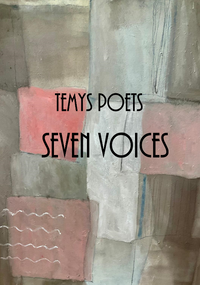
This collection is reviewed in HQ POETRY MAGAZINE 66
NEWS :
Delighted to have a review of STRANGE BUT TRUE in the current
HQ Poetry Magazine...see Biography & Books.
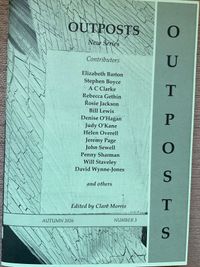
Delighted to have a poem in OUTPOSTS 3 ... Thank you Clare!

URBAN GANGES have produced a reed diffuser bearing my poem, LAST REUNION.
For more information about this aromatic product, please visit : Page 2 at…
I am honoured to be a GUEST POET at ACUMEN LITERARY MAGAZINE :
https://acumen-poetry.co.uk/guest-poems/ (please scroll to find my name)
I am pleased to have my "crown of sonnets " published by the Lothlorien Poetry Journal ,
Visit this link :
https://lothlorienpoetryjournal.blogspot.com/2025/10/visiting-lara-crown-of-seven-sonnets-by.html
My illustrated collection of a haiku a day for a year - A BOOK OF DAYS - can be found at osadapoetry on Instagram . Many of these haiku have now been translated into Romanian by Ioana Drangoi as part of a project at the University of Bucharest.
I have contributed poems, pictures and voice-overs for an excellent film featuring hauku poetry - click this link to view :
www.thegreatmargin.org/haiku/
Visit the Word for the Wild site for my poem : OWLSWOOD PARK
https://wordsforthewild.co.uk/?page_id=10216
I drove to Cirencester to be interviewed and to read some of my poetry on Corinium Radio.
To hear a recording of the programme now:
1) Click the link below to reach it (make sure your sound is turned on!)
2) Once the Drop Box page opens click "Continue to website" at the bottom of the page
3 ) Use the stop/start controls to start the recording.
https://www.dropbox.com/s/932trhp8kson7ba/182%20-%20The%20Writers%20Room%20Transmission%2025-11-19%20Patrick%20Osada%20-%20Copy.mp3?dl=0

Reading at The Lightbox, Woking
Photo from the launch of How The Light Gets In in Maidenhead

More photos of the readings taken by Greg Freeman and posted at WRITE OUT LOUD can be found using this link:
https://www.writeoutloud.net/galleries/?year=2018&month=6&tag=Patrick+Osada+book+launch%2C+Maidenhead%2C+June+2018
INTERVIEWS
https://thewombwellrainbow.com/2018/11/19/wombwell-rainbow-interviews-patrick-osada/
Wombwell Rainbow Interviews: Patrick Osada
Wombwell Rainbow Interviews
I am honoured and privileged that the following writers local, national and international have agreed to be interviewed by me. I gave the writers two options: an emailed list of questions or a more fluid interview via messenger.
The usual ground is covered about motivation, daily routines and work ethic, but some surprises too. Some of these poets you may know, others may be new to you. I hope you enjoy the experience as much as I do.
Patrick Osada is a retired Headteacher, now working as an editor & reviewer of poetry for magazines. He helps to run SOUTH Poetry Magazine, one of the longest running poetry magazines in England. ( http://www.southpoetry.org )
Patrick has been writing poetry all of his adult life. His first success came with a prize-winning poem in a national poetry competition. This gave him the confidence to submit his work more widely, leading to regular publication of his poetry in many of the leading poetry magazines.
Patrick’s first collection, CLOSE TO THE EDGE was published in 1996. It won the prestigious ROSEMARY ARTHUR AWARD and was submitted for The Forward Prize.
His second collection, SHORT STORIES : SUBURBAN LIVES was published in 2004 followed by ROUGH MUSIC in 2006 and CHOOSING THE ROUTE in 2010.
CHANGES, Patrick’s fifth collection, was published in January 2017, his current collection,
HOW THE LIGHT GETS IN, was published in 2018.
Patrick’s work has been included in many anthologies, on internet sites and broadcast on national and local radio in the UK. His poetry has been translated into several European languages and has appeared in anthologies published in a number of different countries. For more about Patrick’s work, visit : http://www.poetry-patrickosada.co.uk
The Interview
1.What inspired you to write poetry?
I suppose poetry has always been with me. As a small child my mother taught me nursery rhymes and read poetry. Looking back, I realise how wide a choice of children’s poetry I enjoyed, ranging from Stevenson’s “A Child’s Garden of Verses” and De La Mare’s “Peacock Pie,” to Edward Lear’s “nonsense” poems, Milne’s “Winnie the Pooh” and “Now we are Six” and, later, Belloc’s “Cautionary Tales.”
2.Who introduced you to poetry?
As I have already explained, I was introduced to poetry as a very young child. However, as a teenager, I was only interested in sport, any kind of reading – let alone poetry – was viewed as a chore and imposition. My saviour was a teacher called C.A.Broome who introduced me to the poets of the First World War as part of my “O” level English course. Suddenly the poems of Rosenburg, Thomas, Blunden and, particularly, Owen, Sassoon, and Henry Reed totally captured my interest and imagination. I realised that poetry could move me in a special way…and I was hooked.
3.How aware were you of the dominating presence of older poets?
From my introduction to the poets of the First World War, I discovered that two famous war poets, F.W.Harvey and Ivor Gurney, were both linked to my home county, Gloucestershire. Later I discovered their association with The Dymock Poets, including Robert Frost and Edward Thomas. At college, my studies introduced me to poets varying from Chaucer, Dryden, Milton and Shakespeare to Keats, Coleridge, Byron, Shelley and Clare. One of my tutors, the famous Welsh poet Leslie Norris, introduced his students to a rising star, the Sussex poet, Ted Walker. I discovered Dylan Thomas, Betjeman, Larkin and Hughes and went to the Royal Albert Hall to see the “Beat Poets”, including Ginsberg, Ferlinghetti and Corso with the British poets Adrian Mitchell and Michael Horovitz…So, as you can see, “the dominating presence of older poets” has always been with me, ‘though I always have regarded them as inspirational rather than dominating.
4.What is your daily writing routine?
I don’t have one!! I don’t write poetry on a daily basis…I write when I have to. I am not one of those writers who works to a timetable, I only write when inspiration and compulsion demand. For me, poetry is a bit like a major illness – stopping normal life and demanding my full attention when it strikes…
5.What motivates you to write?
Anything can act as a prompt to write. Usually a thought, idea or experience will work away in my mind (like grit in an oyster) and start to form the basis for a poem. When this happens I need to quickly jot down words, phrases or lines that come to mind, together with notes (a “storyboard”) of what I want to say. Once this is done I can usually translate this material into a poem… but if I fail to undertake this process the poem evaporates! Consequently I have been known to get up in the middle of the night to write…
I agree with Philip Larkin’s excellent description of what motivates the writing of a poem, it is …”to construct a verbal device that would preserve an experience indefinitely by reproducing it in whoever read the poem.”
6.What is your work ethic?
I’m not sure how to apply this question to writing poetry! In most other things hard work equals reward, but in poetry I suppose a successful poem brings personal satisfaction.
7.How do the writers you read when you were young influence you today?
I’m still reading many of the same poets that I have discovered during a lifetime of reading poetry. I presume that I have absorbed influences along the way, something, perhaps, my readers may be able to identify…
8.Who of today’s writers do you admire the most and why?
Sadly, most of the poets I admire are now dead. I don’t think there are any poets writing today able to match, for instance, Larkin, Hughes, Gunn and Heaney or the three Thomases – Edward, Dylan & R.S. Of living poets I would mention Motion, Duffy Michael Longley and Americans, Sharon Olds and Thomas Lynch.
I probably own more collections by Gillian Clarke than books by any other living poet. I admire the way she blends traditional writing skills with her ability to capture the Welsh countryside and its people.
Two poets I know personally and would recommend are Ian Caws (an Eric Gregory Award winner) for the wonderful way he records life on the Sussex Downs and coast – his technique is sure-footed and his rhyme unobtrusive; Andrew Geary, a newcomer whose first collection, “A Shoal of Powan,” promises great things to come.
9.Why do you write?
I write because I have to… As I said earlier, writing poetry is a compulsion, something I will continue to do until inspiration and “my muse” desert me.
10.What would you say to someone who asked you “How do you become a writer?”
In the first instance, I write for myself – to satisfy this strange compulsion to express myself in a written form. A lot of my early poems were not shared with anyone. Eventually, I mustered the courage to show my work to family and friends, then to seek publication.
My real interest in poetry started as a teenager, leading me to read a lot of poetry throughout my life. I would recommend becoming a reader of poetry as an important a step for any aspiring poet. A lot about style, form and poetic technique can be learnt in this way…
11.Tell me about the writing projects you have on at the momen
I am currently promoting my 6th. And latest collection, “How The Light Gets In”… As this is my latest “project” it is receiving a lot of attention – however, I am glad to say, my poems are still being written!
OTHER NEWS ROUND-UP :